


Technology Trends
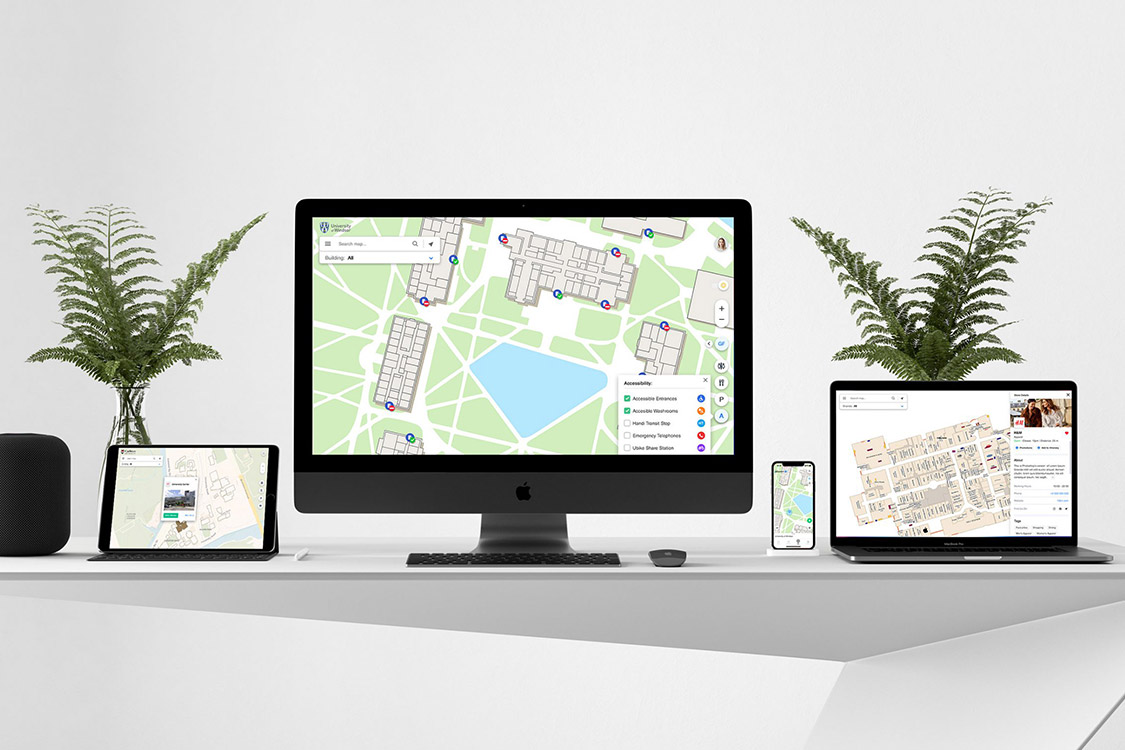
From traditional compasses to smartphone GPSs, we have seen a huge transformation in indoor positioning technology. Location tracking has become such a ubiquitous term that it’s almost impossible to imagine our lives without it. Outdoor navigation using GPS technology is an essential part of our daily lives.
Overview
Indoor positioning technology enables precise location tracking within enclosed spaces like airports, malls, hospitals and warehouses—where GPS fails to function effectively. Unlike traditional navigation systems, it relies on a combination of Wi-Fi, Bluetooth beacons, geomagnetic fields and hardware-free innovations to provide accurate, real-time indoor navigation. This breakthrough in indoor mapping technology supports everything from seamless wayfinding to advanced analytics for businesses. With increasing demand for location intelligence, various types of indoor positioning systems are revolutionizing operations across industries. In this blog, we’ll explore what is indoor positioning system, how does indoor positioning system work and the cutting-edge indoor positioning techniques companies like Mapsted are offering to enhance user experience and operational efficiency.
As useful as GPSs are for outdoor tracking they have traditionally failed to work inside. That necessitates the need for indoor location technology or indoor GPS which guides you when searching for indoor spaces. But, before we jump into indoor positioning technologies, it’s important to see how these indoor technologies have evolved over the ages.
While using ladles made of lodestones in their fortune-telling rituals, the Chinese noticed their unique ability to always point North-South. What seemed to be some sort of mysterious property turned out to be the lodestone’s natural magnetic field. Because of the lodestone’s directional predictability, the Chinese have been credited as the developers of the first compass. This first compass was a square-shaped slab with cardinal points and constellations marked all over it and honestly was not intended to be used as a navigation system. Rather, it was intended to be used in fortune-telling by means of geomancy and feng shui.


The first “compass” dates back between 300-200 B.C. China, during the Han Dynasty and Tang Dynasty.

By the 11th century, the use of the compass as a navigational technique had gained popularity among sailors, voyagers, etc. The compass is China’s gift to the West.
According to Market Watch, the GPS Tracking Device market will be worth 2.89 billion USD by 2023.
How Indoor Positioning Technology Works
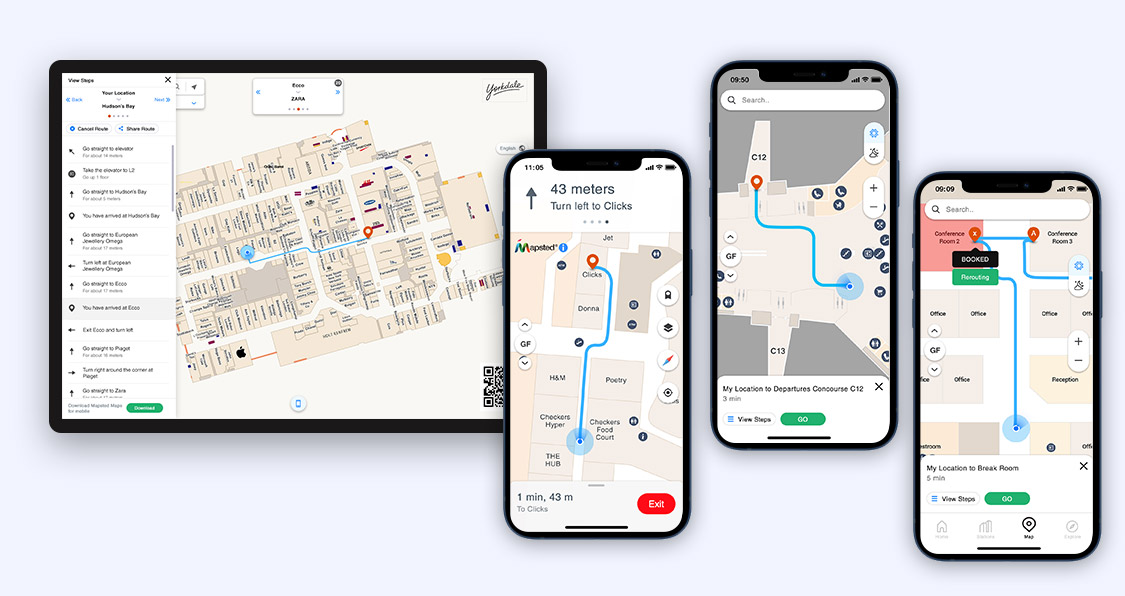
While the compass is known as China’s gift to the West, Mapsted has gifted the most accurate indoor navigation technology to the world. Indoor positioning technologies are very different from global positioning systems.
The term ‘Indoor navigation’ means wayfinding within a building through the use of an IPS (indoor positioning system). An IPS is a network of devices that locate or help people navigate precisely inside buildings such as airports, parking garages, underground locations, schools, hospitals, resorts and shopping malls. There are many different methods, techniques and devices, such as Bluetooth beacon indoor positioning technology and Acoustic indoor positioning system technology that are synonyms for indoor navigation; all of which revolve around mobile devices. Today, smartphones come loaded with technology such as Wi-Fi, Bluetooth, digital cameras and clocks. They relay information to beacons at strategic points throughout a defined geographic area.
The term “indoor positioning technology” is broad and easy to implement in almost every industry whether it be commercial, military, retail or inventory tracking industries. While there are many commercial systems on the market, there are no standard indoor navigation platforms (yet). Instead, the installation of an indoor navigation platform is specific to the customer’s spatial dimensions, accuracy needs and budget limitations.
IPSs rely on the use of different indoor technologies, including distance measurement to nearby anchors with fixed positions (e.g, Wi-Fi routers or Bluetooth beacons), magnetic positioning and dead reckoning. They either actively locate a mobile device or provide ambient location or environmental context by sensing iOS or Android devices.
Current Approaches to Indoor Positioning Technology
Prior to Mapsted, there were 5 main approaches to detecting indoor location information: GPS/ cellular technology, Bluetooth beacon indoor positioning technology, geomagnetic technology, UWB indoor positioning system technology and inertial navigation technology.
GPS/ cellular technology simply doesn’t work. Walls and similar obstacles interfere with the signal between satellites and mobile devices. While a 30-meter mistake is relatively okay for Google Maps outdoors, 30 meters indoors could be the difference between walking into the store you actually want to go into or not.
Wide-scale deployment of Bluetooth beacon indoor positioning technology at numerous positions inside helps cover the entire facility. Yes, beacons are precise, but customers must have their Bluetooth enabled or be connected to Wi-Fi within 100-150 meters. Scaling beacons is hard because their batteries must frequently be replaced and their accuracy gradually diminishes.
Indoor magnetic disturbances greatly impact Geomagnetic technology. Environmental changes such as renovations, hospital machinery, kiosk placement or furniture rearranging can interfere with accuracy.
Ultra-wideband (UWB) is interesting. Three or more ultra-wideband readers transmit a very wide pulse over a GHz of the spectrum. The readers then listen for chirps from ultra-wideband tags. These tags have a spark-gap-style exciter that generates a little pulse within them, which creates a short, coded, very wide, nearly instant burst. The readers then report very accurate time measurements from the tags back to a central server. Because the UWB signal is extremely wide, the accuracy of the location information is relatively good. However, UWB indoor positioning system technology is the most expensive system to install. Even though UWB tags are inexpensive, every location has to have at least three readers because of the limited range of the tags. These readers are very expensive.
Inertial navigation technology can cause problems just from daily cell phone use. Phone swinging, change in orientation or simply not walking in a straight line can affect the accuracy.
Indoor Positioning Technology in Action
By far, beacon-based indoor positioning technologies have been the most popular indoor navigation technology. In theory, Bluetooth beacon indoor positioning technology should allow for smart and highly detailed data collection.
Forbes wrote that beacons would be “especially useful in places (like inside a shopping mall) where GPS location data may not be reliably available” and also said that, “BLE [Bluetooth Low Energy] allows for interactions as far away as 160 feet” with greater sensitivity than GPS or Wi-Fi tracking methods. This should mean owners have access to the same detailed insights into their in-store activity as they do on their app or website.
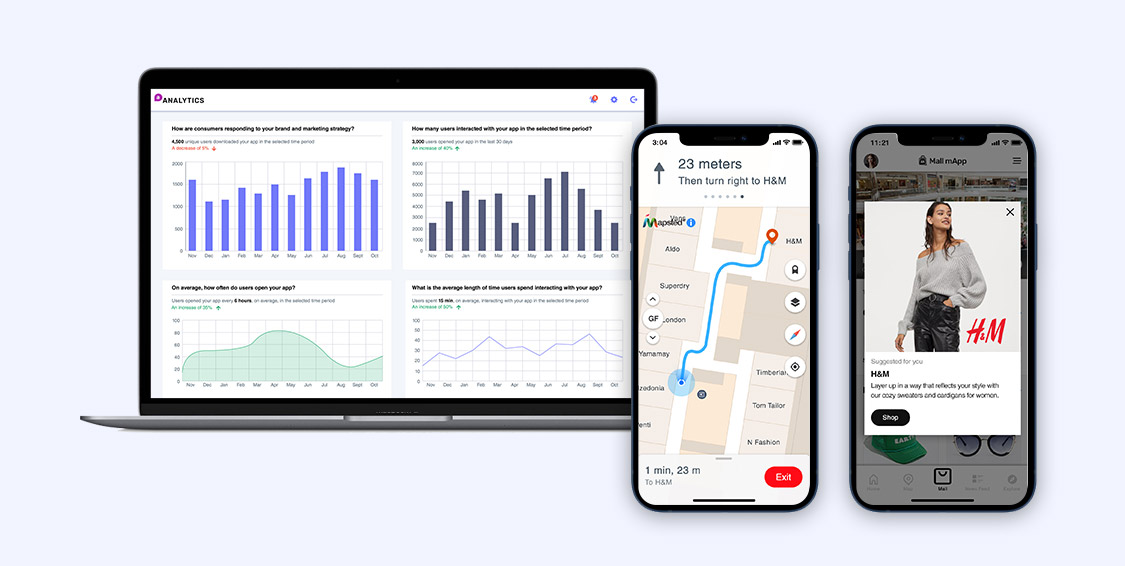
A good beacon network should allow you to track how customers move throughout each store. You should be able to see all their patterns in detail, aisle by aisle. Then with this data, you should be able to optimize the layout of every store, understand what is working about your in-store experience and take the small information gathered to make big improvements to your customer personalization and targeting.
In actuality, traditional location-based services are one-dimensional. Meaning that when mobile users use beacon-based indoor positioning technology, they only receive GPS services- nothing more, nothing less.
Mapsted’s Innovation
Mapsted’s hardware-free indoor positioning technology is new, cost-effective and innovative. This technology allows users to navigate indoors without the technical limitations experienced by other solutions such as WiFi or Beacons. Mapsted is the leading provider of hardware-free indoor location tracking technology. They have developed an advanced algorithm that uses a unique combination of sources to accurately pinpoint a person’s location in any indoor venue. Since this technology is hardware-free, users can navigate through traditional dead zones, such as tunnels, using only their smartphones and still expect 1-3 meter accuracy.
Unlike traditional one-dimensional location-based services, Mapsted is divided into 3 distinct segments that ensure everyone’s indoor positioning technology needs are met.
I) Under the Location Positioning Technology division, Mapsted offers a suite of products that deliver seamless outdoor-indoor navigation without the need for beacons, Wi-Fi or additional external hardware.
II) Mapsted’s Location Marketing Technology arm helps clients identify the right audience for their services and improves customer engagement with advanced market segmentation and targeted notification tools.
III) The Location Analytics Technology unit provides business clients with deep insights into customer behavior and a comprehensive location-based analytics suite.
Because of this diverse product line, Mapsted is more than just an indoor GPS company. Mapsted provides location-based services to cater to everyone’s unique needs.
How Do Indoor Localization Technologies Work Without Beacons?
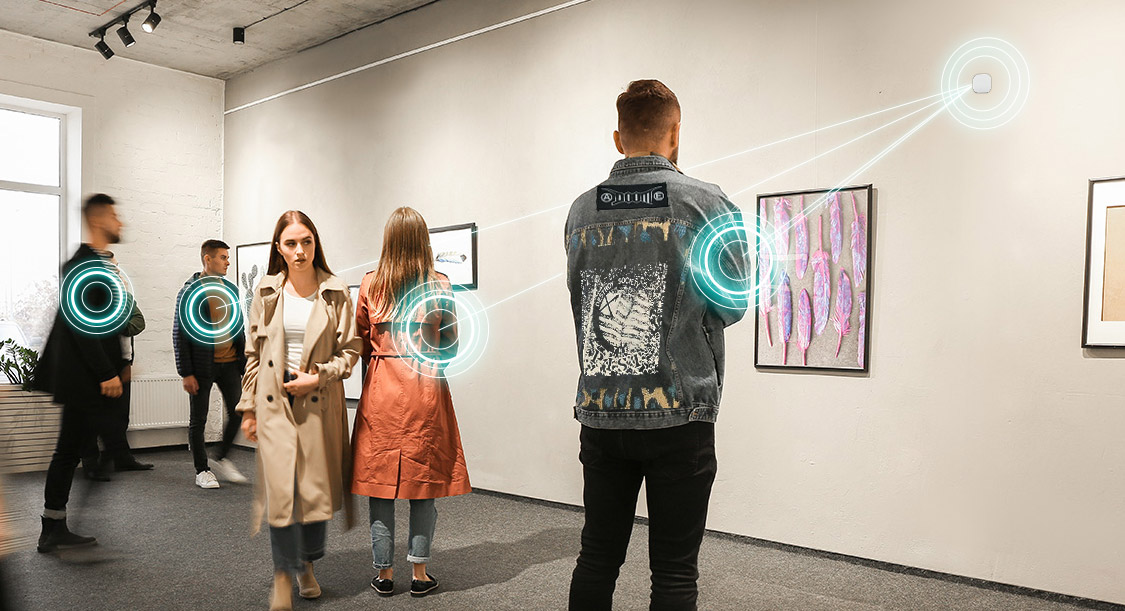
We know you’re probably wondering how Mapsted managed to create an accurate indoor positioning system that doesn’t rely on beacons or Wi-Fi. The truth is, the technology is highly innovative and patented, so this information is scarce. If you do want to learn more about Mapsted’s hardware-free indoor positioning technology.
In short, Mapsted uses an advanced algorithm that consists of a unique combination of sources to accurately pinpoint a user located in any indoor venue, allowing them to precisely guide that user along their journey.
How to Build an Indoor Positioning System
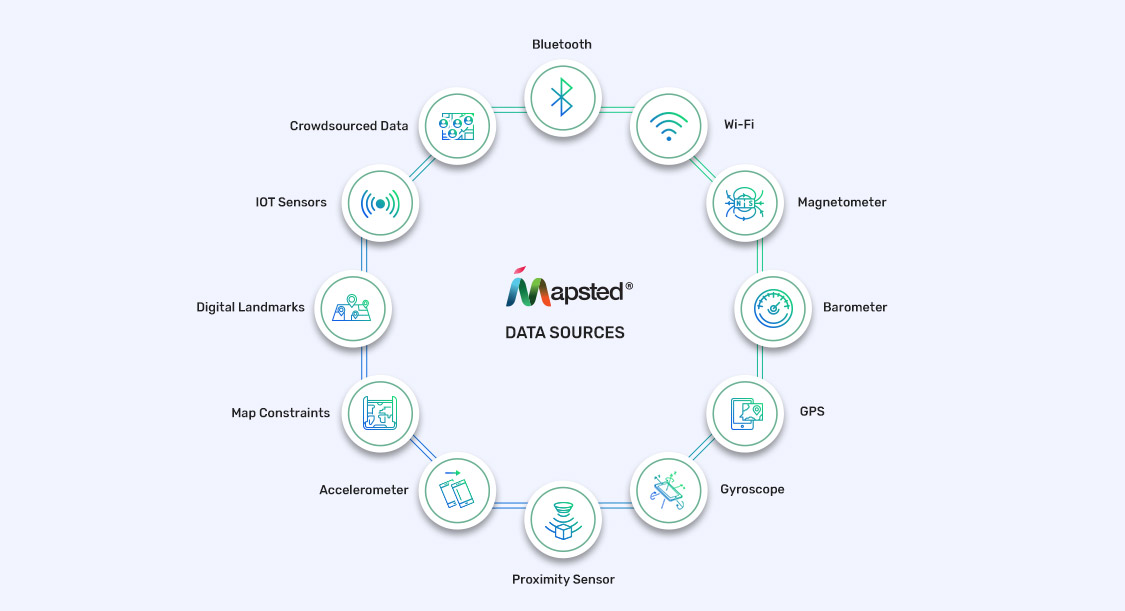
To build your own indoor positioning system, first, you must think about what exactly your positioning needs are- do you need Mapsted’s positioning services, marketing services, analytics services or everything?
Next, click here to get in contact with a member of our sales team. Our sales team will walk you through every step of the process.
From lodestones for outdoor navigation to indoor positioning technology on smartphones for indoor navigation, positioning technologies have vastly evolved. It’s our mission here at Mapsted to continue to provide the most advanced indoor navigation platform possible, surpassing all your mapping needs.
Subscribe to our blog today to stay up-to-date with the latest mapping news and updates!
Frequently Asked Questions
Q1. What exactly is indoor data?
Ans. Any activity on your smartphone generates data and simply changing its position generates data, which is typically the smartphone’s location within an indoor area.
Q2. What is the most effective indoor positioning technology?
Ans. Today, a variety of indoor positioning technologies are in use. Ultra-wideband (UWB), Geomagnetic, WiFi, Bluetooth Beacons (BLE) and Radio-Frequency ID (RFID) are some of the best.
Q3. How does indoor positioning operate?
Ans. To achieve room-level accuracy, tags that emit signals in pulses and receiver devices that pick up signal transmissions are required. The data would then be measured for real-time positioning using time of arrival, angle of arrival and other methods.
Q4. What exactly is blue dot navigation?
Ans. Blue-dot navigation is a well-known type of navigation. Most of us have used Google Maps, which displays our current location as a visible dot and a path if we enter a destination. This is the best example of Blue-dot navigation in the wild. Similarly, an indoor version is available through Mapsted.
Q5. Can GNSS be used indoors?
Ans. While GPS is the gold standard for outdoor navigation, it is ineffective indoors due to poor accuracy and the inability of signals to penetrate large obstacles. This is the reason why GNSS isn’t popular for indoor navigation or positioning. However, Google offers GNSS-based indoor navigation without leaving the Google Maps app.
Q6. What industries benefit the most from indoor positioning technology?
Ans. Industries such as retail, healthcare, transportation, logistics, manufacturing and tourism benefit significantly. They use indoor positioning technology for customer navigation, asset tracking, workforce management and safety compliance.
Q7. What is the difference between indoor positioning and indoor mapping?
Ans. Indoor positioning technology determines a person’s or object’s location inside a building, while indoor mapping technology provides a digital layout of that building. Together, they enable detailed navigation and spatial awareness.
Q8. Can indoor positioning technology work without Wi-Fi or Bluetooth?
Ans. Yes, Mapsted’s innovative indoor positioning technology operates without relying on external hardware like Wi-Fi, Bluetooth or beacons—making it a cost-effective and scalable solution for internal positioning system use cases.
Q9. How accurate is indoor positioning technology?
Ans. Accuracy can vary by system and technology, but modern indoor localization systems like Mapsted’s offer precision as close as 1–3 metres without external hardware.
Q10. Is indoor positioning technology secure?
Ans. Yes, most modern indoor navigation technologies prioritize data privacy and security. Mapsted, for instance, offers encrypted data handling and ensures compliance with global data protection standards.


