


Big Box Retail & Malls

Despite bumpy years and empty retail mall spaces, today’s shopping malls remain money-making hubs. Post-pandemic, shoppers love to purchase items in person and experience a day in a mall environment. Despite the problems faced by shopping malls, such as vacancies and challenges posed by evolving consumer trends, the allure of a bustling atmosphere, energetic buzz, and the chance to physically interact with products before making a purchase remains a significant draw for consumers. Shopping malls continue to be a hub for retail experiences, yet mall navigation problems remain a significant challenge for visitors.
Indoor navigation in malls plays a crucial role in ensuring smooth customer journeys, enhancing shopper satisfaction and driving higher sales. Without proper navigation solutions, malls risk losing customers to frustration and inefficiency.
In fact, according to a Statista prediction, global retail sales – which include online and in-person sales – are projected to reach $31.7 trillion USD by 2025, up from approximately $23.74 trillion in 2020.
In fact, according to a Statista prediction, global retail sales – which include online and in-person sales – are projected to reach $31.7 trillion USD by 2025, up from approximately $23.74 trillion in 2020.
Many malls, however, can be massive and often confusing. Shoppers trying to find the “You Are Here” kiosk to figure out where their desired stores are can often lead to frustrated. If your facility’s navigation strategy does not include a location-based technology, you are missing out on opportunities for increased sales and shopper engagement.

Shopping malls with poor indoor navigation face problems such as:
1) A Negative Customer Experience
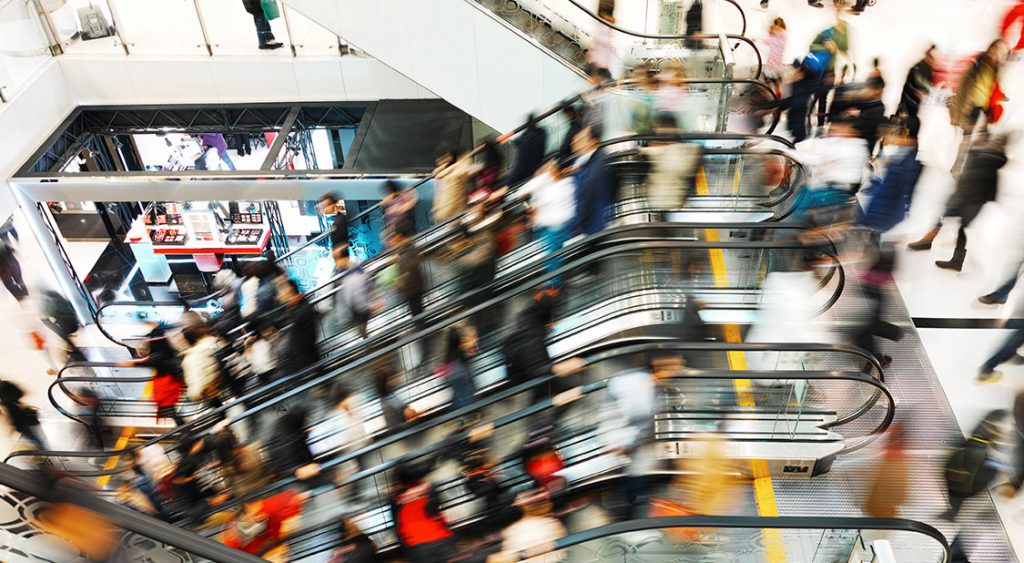
Customers who cannot navigate a shopping center with ease miss out on discovering the shops and amenities that would really fulfill their needs and make their experience the best it could be.
2) Poor Crowd Control
Thousands of shoppers visit malls every day. At peak times, it’s almost impossible to avoid crowds and high traffic. But the real problem occurs when people collect in areas of the mall where all the popular stores are, or in the food court. This is another problem malls with poor indoor navigation face.
3) Reduced Customer Loyalty
Loyal customers are customers who express gratitude by repeating their visits or orders. However, customer satisfaction is challenging if they can’t even find their way around the shopping mall. Every marketer knows it costs five times more to acquire a new customer than it does to retain a returning one. Helping customers easily locate their favourite stores helps keep them satisfied.
4) Compromised Safety
If shoppers can’t get in and out of shopping malls quickly, they face the danger of panic behaviour such as stampedes. Incidents such as shootings or fires leave shoppers running around looking for exits. If you don’t create a simple mall layout and allow shoppers to orient with it through an indoor location technology platform incidents such as these can become much worse.
5) Diminished Zone-to-Zone Conversion
Shopping mall owners who use navigation platforms to offer turn-by-turn navigation to shoppers and can analyze popular routes are a step ahead of the rest.
Picture The Gap and H&M attracting the same types of shoppers. A location-based technology solution could help the mall owner decide to position the two stores close to each other, with one or two less popular stores in between. This strategy would improve the profitability of each store in the mall and make it easier for this targeted shopper group to find what they need in the mall.
Powerful Indoor Location Services
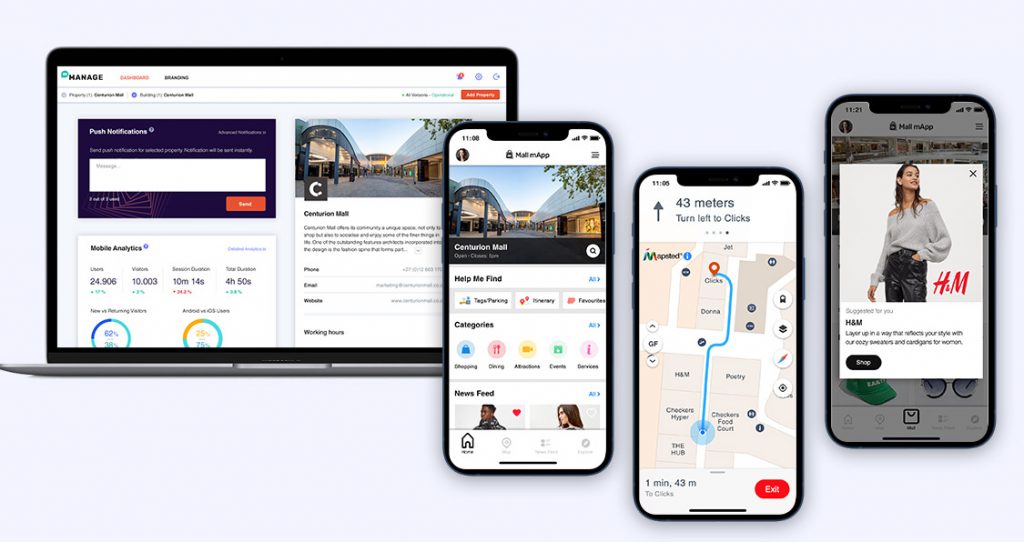
Mapsted‘s location-based technology solution for retail malls offers high-quality indoor navigation for shopping centers. The technology can be deployed within weeks and requires no beacons, external Wi-Fi or additional external hardware. Our advanced navigation platform, in addition to location marketing and analytics capabilities, will dramatically improve your mall’s user experience and maximize efficiencies and profits.
Mall navigation solutions, such as digital indoor mapping, enable customers to navigate seamlessly through shopping centers. By implementing indoor navigation technology for malls, retailers can provide real-time location services, reduce congestion and improve overall shopping experiences. As retail spaces evolve, the need for indoor navigation systems for shopping malls will continue to grow. Advanced wayfinding solutions help address wayfinding challenges in retail spaces, ensuring customers enjoy hassle-free and efficient shopping trips.
If you are interested in learning more about what Mapsted can do for your shopping mall or large retail space you can find more information on our website, and you will enjoy our blog on the Top 10 Emerging Retail Industry Trends To Watch Out for in 2025.
Frequently Asked Questions
Q1. What is indoor mapping in simple words?
Ans. Converting your floor plan from 2D to digital with clearly marked points of interest completes the indoor map. It represents marked features and facilities within a venue to simplify wayfinding and allow users to easily orient themselves to their surroundings.
Q2. How much does an indoor navigation app cost to develop?
Ans. An indoor navigation map is a complex solution that addresses the needs of large venue owners. However, developing them from scratch can cost tens of thousands of dollars. On average, developers of indoor navigation apps spend $20000 or more to develop functional navigation features. This is why many find Mapsted’s indoor navigation bang for the buck.
Q3. How are indoor navigation systems implemented?
Ans. It’s done in four simple steps:
- The indoors of the venue are thoroughly mapped
- Users are encouraged to download a smartphone app
- Wi-Fi fingerprinting methods or BLE are used to help users navigate
- The signal data is processed on the server side using high-performance algorithms.
Q4. Why is indoor navigation important?
Ans. When users enter large malls, they are entering an unfamiliar environment and frequently find signs and layouts confusing. Getting lost affects not only sighted members but also those who are visually impaired. In such cases, an indoor map would feel like a personal tool designed to increase convenience and confidence.
Q5. Which is the best indoor positioning system for malls?
Ans. Try Mapsted’s indoor navigation solution, which includes lifetime support and the ability to customize maps to meet your specific indoor positioning and navigation requirements. It will be intuitive in the hands of your mall visitors, ensuring complete convenience and satisfaction.
Q6: How do malls solve wayfinding challenges for visitors?
A: Shopping centers implement solutions such as indoor navigation technology for malls, digital maps and mobile wayfinding apps to improve customer navigation and enhance the overall shopping experience.
Q7: What are the key challenges with indoor wayfinding in malls?
A: Major challenges include poor signage, complex layouts and a lack of real-time guidance. Implementing smart navigation in malls ensures visitors can find stores, food courts and exits without confusion.
Q8: How does indoor navigation in malls impact sales?
A: Effective indoor navigation systems for shopping malls enhance customer satisfaction by reducing frustration and increasing the likelihood of purchases, ultimately boosting revenue for retailers.


