


Big Box Retail & Malls
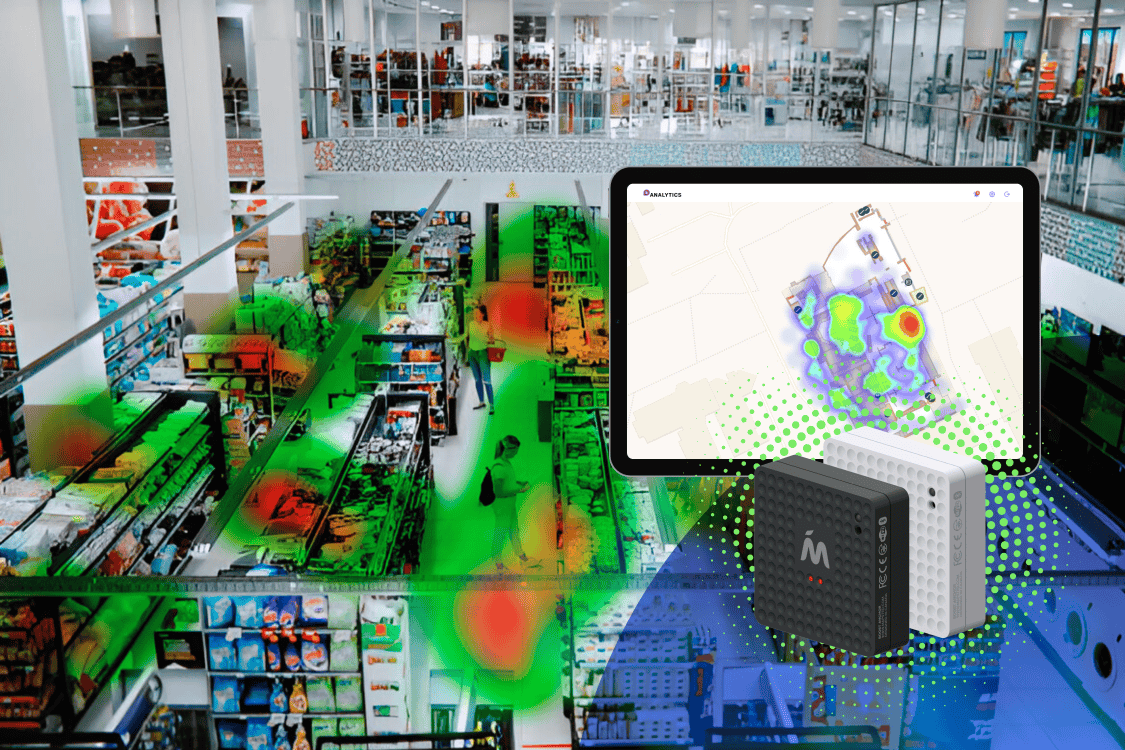
Shopping spaces are bustling hubs of activity and in-store heat map technology ensures every corner of your retail space contributes to your success. This innovative tool analyzes customer movements and foot traffic to highlight high-demand zones and areas needing optimization. Whether looking to improve layouts, target promotions or streamline operations, heat maps provide actionable insights without compromising privacy. Here’s everything you need to know:
What Is In-Store Heat Map Technology?
In-store heat map technology combines IoT devices with location analytics to visualize customer activity across your retail space. By displaying movement data as colour gradients, it highlights areas of high and low foot traffic. This data can then be stored and used to devise footfall information, traffic patterns and much more.
With the global indoor location-based services market projected to reach $31.4 billion by 2029, heat maps are at the forefront of retail innovation. Heat map technology services are a core offering in this advancing sector.

With the global indoor location-based services market projected to reach $31.4 billion by 2029, heat maps are at the forefront of retail innovation. Heat map technology services are a core offering in this advancing sector.
For a retail business, it is essential to understand customer behavioural patterns to develop marketing strategies and employ better customer experiences. With many players in the market, it is essential to choose a technology partner that will be the right fit for an ever-changing retail space. Enter Mapsted, a revolutionary leader in the space of location technology, offering patented heat mapping technology that is scalable and accurate. Unlike conventional retail store heat map systems that rely on intrusive methods like cameras, Mapsted’s Flow offers a GDPR-compliant, minimal hardware solution that delivers precise, real-time analytics.
How Does Heat Mapping Work?
- Data Collection: Small IoT devices, such as Mapsted’s Boost units, detect Wi-Fi-enabled devices anonymously.
- Data Processing: Algorithms analyze patterns like movement and dwell times to map customer behaviour.
- Real-Time Visualization: Insights are presented on an intuitive dashboard, offering immediate clarity and direction.
- Privacy Protection: Data is anonymized and compliant with strict privacy laws, ensuring security for both customers and businesses.
Leveraging Heat Map Technology in Retail Malls
- Enhancing Store Layouts: Retailers like Samsonite have utilized heat map technology to assess foot traffic within their stores. By analyzing these heat maps, they identified high and low-traffic areas, allowing them to optimize store layouts and improve customer flow.
- Targeting Promotions: Sephora has implemented heat mapping to understand customer interactions with products. This insight enabled them to strategically place promotional items in high-traffic zones, leading to increased visibility and sales.
- Allocating Resources: By employing heat map technology, retailers can determine peak shopping times and areas with the highest customer concentration. This information is crucial for effective staff deployment, ensuring that employees are available in areas where customers need assistance the most.
Maximizing Seasonal Sales with Heat Mapping
Seasonal sales demand data-driven strategies. Heat maps help by:
- Optimizing Product Placement: Place popular items in high-traffic areas identified through Mapsted Flow.
- Designing Campaigns: Use behaviour data to create targeted, impactful promotions.
- Managing Crowds: Mapsted’s IoT devices dynamically track hotspots, preventing overcrowding and improving customer comfort.
Benefits of Using Heat Mapping in Retail
- Boost Revenue: Identify premium zones for rentals or product placement.
- Stay Competitive: Make data-backed decisions to stay ahead of market trends.
- Streamline Operations: Allocate staff and resources efficiently to reduce costs.
- Improve Shopper Experience: Address bottlenecks and create seamless navigation paths.
- Enable Informed Marketing: Tailor campaigns to shopper behaviour and preferences.
Mapsted’s solutions integrate seamlessly with existing systems, offering precise analytics through minimal hardware.
Conclusion
The retail industry is evolving and in-store heat mapping technology is the key to staying ahead. With Mapsted’s innovative solutions, retailers gain unparalleled insights, enabling smarter decisions that enhance profitability and customer satisfaction.
According to Grand View Research, the location analytics market will grow at a CAGR of 16.1% through 2030, emphasizing the importance of leveraging tools like heat mapping.
According to Grand View Research, the location analytics market will grow at a CAGR of 16.1% through 2030, emphasizing the importance of leveraging tools like heat mapping.
It’s time to reimagine your retail potential with Mapsted.
If you found this blog helpful, check out our article on What Is Heat Mapping and How Can It Help Your Business? Or watch a quick video on Redefine Location Intelligence with Mapsted Heat Mapping and more.
Frequently Asked Questions
Q1. What is in-store heat map technology?
Ans. It visualizes customer movement within a store, using colour gradients to highlight high and low-traffic zones and optimizing layouts and marketing efforts.
Q2. How does heat mapping benefit retailers?
Ans. It increases efficiency, enhances customer experience, boosts sales and reduces operational costs.
Q3. How does Mapsted ensure data privacy?
Ans. By anonymizing all collected data, Mapsted’s solutions comply with GDPR and other privacy laws.
Q4. Can heat mapping improve seasonal sales?
Ans. Yes, by providing data to optimize product placement, manage crowds and design targeted campaigns.
Q5. What sets Mapsted apart?
Ans. Mapsted offers minimal hardware solutions that are cost-effective, easy to implement and highly accurate.


