


Big Box Retail & Malls
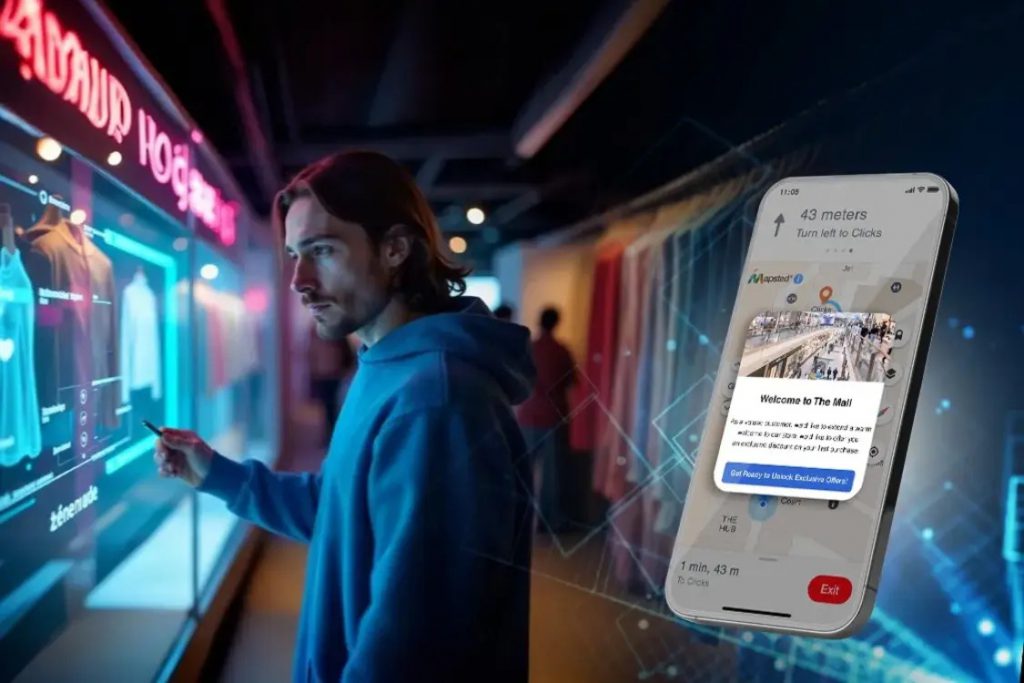
Just having a store with good lighting and a few sale signs isn’t enough anymore. People walk into malls or large retail spaces with a purpose and often, very little time. If they don’t find what they need quickly or feel like the experience is confusing or disconnected, they’ll walk right out. That’s where location-based AI comes in—and it’s changing everything. If you’re wondering how is AI used in personalized shopping, this is the kind of experience it creates—contextual, helpful and built around real-time behaviour.
We’re talking about smart tech that understands where your customers are, what they’re likely to want and how to guide them through your space in a way that’s useful, personal and surprisingly smooth.
For mall owners, retail managers and big store chains, this isn’t merely a fun add-on — it’s something that can directly impact foot traffic, time spent in-store and, eventually, revenue.

Let’s break it down.
Shopping Isn’t Random—AI Makes It Personal
Your mall is not the first touch point; people come with a lot of things in their head when they enter the mall. Perhaps they’re in the market for sneakers, a new phone or just some lunch. But short of placing someone at every entrance asking what each shopper is looking for (which, of course, doesn’t happen), you’re not directing them.
With location-based AI—especially when paired with geofencing and indoor positioning—you can identify where a customer is in real time and send them smart, helpful nudges.
Say a shopper walks past a shoe store and they’ve looked at sneakers on your mall app previously. That system could send them a gentle ping: “20% off all Nike styles at SoleStreet today.” That’s not spam. It’s relevant, timely and based on his location and what he’s already expressed interest in. That’s how to create personalized shopping experiences.
This is where platforms like Mapsted come into the picture with smart retail technology. Unlike systems that rely heavily on Wi-Fi or beacons, Mapsted’s AI-powered indoor location tech doesn’t need any of that. It operates directly from the shopper’s smartphone and can track location to within a few meters — including within multi-floor malls and complex retail spaces. That means less infrastructure headaches for you and improved targeting for your customers.
The Numbers Back It Up
This isn’t just an idea that sounds good—it’s backed by data.
- The indoor positioning and navigation market was worth around USD 20.38 billion in 2023 and is expected to grow at a CAGR of 37.6% through 2030. That’s a serious leap and malls are a key driver behind it.
- The geofencing market is also growing fast—from USD 2.73 billion in 2024 to USD 3.41 billion in 2025, with a 24.7% CAGR.
- Businesses using location-based marketing have seen an 89% jump in sales and an 86% increase in their customer base. That’s not just footfall—that’s real engagement and results.
Mall Directories Are Dead, Wayfinding Is Alive
But the question is how AI is transforming the shopping experience? We’ve all seen people squinting at those big digital mall maps with a “You are here” label. Some still work, but let’s be real—most people pull out their phones. The challenge? Google Maps doesn’t help once they’re inside the building.
That’s where location-based wayfinding apps with AI in retail kick in.
Imagine a shopper searching for “men’s formal shirts” inside your mall’s app. Instead of just showing which store sells them, the app can calculate the shopper’s exact location and guide them to the right spot, turn by turn, floor by floor. All of it without asking security guards or getting frustrated walking around aimlessly.
From a business point of view, that’s gold. The faster a customer gets to what they want, the more likely they are to buy. You’ve shortened the buying journey from a wandering walk to a guided path.
Again, Mapsted helps here, too—it offers smart wayfinding without the need for hardware. Just the shopper’s phone and your digital map are connected by AI.
No More Guesswork—Geofencing Knows When They’re Nearby
Geofencing may sound complicated, but it is really just a smart invisible fence around a spot. The moment a customer crosses through that zone, you can trigger certain actions — whether to send a deal, notify staff or track their visit for later personalization.
For example, if someone enters the food court area around lunchtime, your system could suggest nearby meal deals or new menu items. If they have been to that area three times this month, perhaps it is time to give them a loyalty award.
This is not about bombarding phones with adverts — this is about delivering the right message at the right time as a result of physical activity.
Real-World Examples That Prove How is AI used in personalized shopping
Here are a few real stories—not from tech vendors but credible, proven cases:
Old Navy’s RADAR System
Old Navy deployed a sophisticated in-store operating model called RADAR in more than 1,200 stores across the U.S. It merges RFID, AI and computer vision to provide real-time analytics around inventory.
What does that mean in real life? Employees can track down products instantly, restock shelves quicker and fulfill online orders faster. For shoppers, it means fewer “sorry, we’re out of stock” moments and more consistent service.
By connecting physical stores with smart tech, Old Navy is giving customers the kind of efficiency they usually only expect from e-commerce.
This is a classic example of How is AI used in personalized shopping.
Iconic Soda Shop in Nashville
This soda shop in Nashville wanted to attract more tourists. They used geofencing to set up virtual zones around busy tourist areas. When people entered these areas, they got mobile ads with quick offers—like click-to-coupon deals.
The result? More foot traffic, better brand visibility and stronger positioning in a highly competitive local market. It worked because it spoke directly to the tourist crowd right when they were nearby and open to suggestions.
Retail Isn’t Dying. It’s Getting Smarter.
People still love going to stores. They like browsing, trying things, grabbing food and spending time out. But now, they expect convenience, personalization and speed—the same things they get online. So, how is AI used in personalized shopping—AI-driven location tech brings that to real-world spaces. Think:
- Personalized notifications
- Smooth wayfinding
- Location-aware offers
- Real-time inventory insights
- Whereabouts from actionable analytics for foot traffic and shopper flow
Whether you oversee a high-end shopping mall, a chain of fashion boutiques or even just a food court—this tech is what allows you to serve better and sell smarter.
What Makes It Even More Useful for Owners?
Location-based AI isn’t just for marketing. It helps behind the scenes, too.
- Operations: Track peak foot traffic areas, optimize layouts and reduce congestion.
- Security: Know where people are congregating and get alerts in real time.
- Staffing: Deploy help where it’s actually needed instead of guessing.
- Data: Understand customer movement patterns to make informed business decisions.
This is retail management powered by data—not guesswork.
Privacy Isn’t an Afterthought—It’s Built-In
A typical question is: “Don’t customers worry about being tracked?
Fair enough. But the best location-based platforms today are privacy-compliant, provide opt-in experiences and explain clearly what you can expect in exchange.
It’s simple: if you give people value—like better service, exclusive deals and easy navigation—they’re usually happy to share their location while they’re inside your mall.
The key is transparency and control. Let people choose what they share and when. And when they do, respect it.
Start Small. Scale Smart.
You don’t need to install 500 sensors or hire a new tech team to get started. Many systems—like Mapsted’s—let you begin with basic wayfinding or a geofencing campaign.
You can test it. See what works. Then grow.
When you see shoppers taking more time in stores, interacting more with your app or responding better to promotions—you’ll know the tech is doing its part.
Final Thoughts
Location-based AI is changing how malls and retail spaces run. From sleeker store layouts to cleverer marketing to speedier service, it’s enabling physical environments to function more like digital platforms — interconnected and effective and customized to someone’s need.
You don’t need to recreate your mall or store from zero. Just make it smarter. Provide shoppers with the experience they expect — and get them to return. If you found this blog helpful, please read our blog on “Where AI Meets Indoor Mapping: Discover the Next Frontier of Navigation” or watch our video on “Mapsted – Empowering Every Step with Intelligent Navigation” to learn more.
Frequently Asked Questions
Q1. How is AI used in personalized shopping malls?
Ans. It’s a technology that enables malls to see, in real-time, where shoppers are. Its combination of smart retail solutions. It uses that information to point them in the right direction, send offers or provide services — like an assistant for your physical environment.
Q2. How does wayfinding with AI help shoppers?
Ans. People can search for a store or item, in the app and see turn-by-turn directions from their location, it said. We are not roving around or searching for maps — it saves time and also makes the visit smoother.
Q3. What’s geofencing and how is it useful?
Ans. Geofencing creates a boundary around a location — say, the entrance to your mall. Once someone walks into it, you are able to send them offers or updates via your app. It’s a smart way to catch people when they’re in the vicinity.
Q4. Is this tech expensive or hard to set up?
Ans. Not really. A few systems, such as Mapsted, require no hardware or Wi-Fi at all. You can begin with a single integration with a mobile app and develop from there — inexpensive and easy to scale.
Q5. Do shoppers need to worry about privacy?
Ans. No. Most systems only work if users opt-in. They remain in control and the data is used solely to enhance their experience — nothing gets shared without consent.


